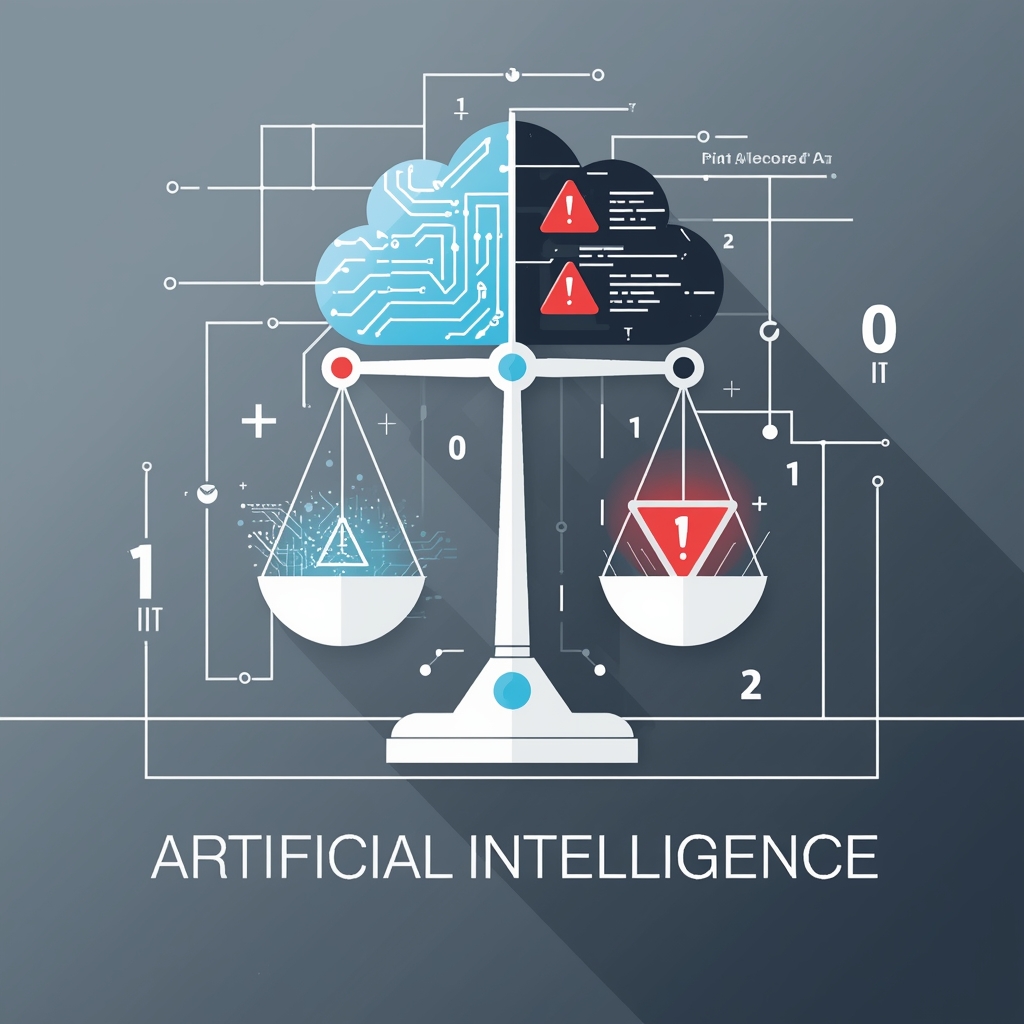
Many conspiracy theories about AI mix real concerns with exaggerated or false claims. Psychology research shows that when people already distrust powerful institutions, they’re more likely to believe that AI will be turned into a tool of oppression, even when there’s no evidence of such a secret plan.

AI can massively boost productivity and growth, but it can also deepen inequality, concentrate power, and supercharge persuasion and manipulation if it is not governed well.
Economic benefits
-
Productivity and growth: Studies estimate AI could add several tenths of a percentage point to annual growth in advanced economies and trillions to global GDP by 2030 by automating routine tasks and augmenting skilled work.
-
New industries and jobs: Demand for data centers, chips, cloud services, and AI integration has created new investment waves, specialized roles (prompt engineers, AI product managers, safety researchers), and construction and energy projects to support infrastructure.
-
Cheaper and better services: AI can lower costs in healthcare, logistics, customer service, and finance (for example, faster diagnostics, better fraud detection, more efficient supply chains), which in principle raises living standards.
A concrete example: an AI system that helps a small logistics firm optimize routes can cut fuel use and labor hours, letting it serve more customers with the same staff.
Economic harms
-
Job displacement and “decoupling”: Analysis for 2025–2026 warns that AI investment can drive GDP up while employment and wages stagnate, breaking the historical link between growth and broad job creation. This shows up most in clerical, routine cognitive and some creative roles, where up to around a third of work hours are technically automatable.
-
Inequality and “K‑shaped” outcomes: AI‑intensive firms and highly skilled workers capture large gains, while lower‑income and less‑educated groups see weaker wage growth or job loss, creating a split where markets look healthy but many households feel poorer.
-
Bubble and instability risk: The current AI boom is heavily driven by debt‑funded investment in data centers and infrastructure, which some analysts call a classic bubble (overinvestment, over‑valuation, over‑leverage). A sharp rise in interest rates or a slowdown in AI demand could trigger a painful correction with knock‑on effects for the wider economy.
In conspiracy terms, this can look like “they’re using AI to make the rich richer and the rest of us obsolete”; the reality is more a mix of structural tax and policy choices that favor capital over labor plus corporate incentives, not a single secret plan.

Power and geopolitics
-
Strategic asset: Advanced AI and the chips, cloud infrastructure, and data it needs are now treated as strategic resources on par with oil or nuclear tech. States see AI as critical for military systems, cyber‑operations, intelligence analysis, and economic competitiveness, which drives an arms‑race dynamic.
-
Corporate concentration: A handful of big tech companies control frontier models, cloud platforms, and key datasets, giving them outsized leverage over what tools exist, what is safe‑guarded, and who can compete. Governments in turn rely on these firms for infrastructure and expertise, blurring the line between public and private power.
-
Regulatory capture and lobbying: Because AI is complex and fast‑moving, large firms have an advantage in shaping the rules (standards, liability, privacy), which can entrench their position and limit democratic oversight if checks are weak.
From a conspiratorial perspective, this easily turns into “AI is a tool for a global technocratic elite”; the grounded concern is that without strong antitrust, transparency, and international coordination, power over information and infrastructure can centralize in ways that are hard to reverse.
Controlling minds: benefits and risks
Helpful uses for influencing behavior
-
Education and mental health: AI tutors and counseling assistants can deliver personalized explanations, coping strategies, or debunking dialogue that measurably reduce belief in certain conspiracy theories or harmful misinformation for months after a single interaction.
-
Public health and safety messaging: Tailored bots can adapt explanations to someone’s values and level of knowledge, helping them understand vaccines, climate risks, or financial scams better than generic one‑size‑fits‑all campaigns.
Here AI is “controlling minds” only in the same sense that any education or persuasion does: it offers information and arguments, and people still choose what to accept.
Harmful or manipulative uses
-
Micro‑targeted persuasion at scale: AI can generate and test thousands of versions of political ads, memes, or narratives, tuned to demographic and psychological profiles, and then optimize them based on engagement and conversion metrics. This goes beyond old‑style TV ads by making each person’s feed a custom influence stream.
-
Deepfakes and synthetic media: Realistic fake video, audio, and text can be used to impersonate leaders, fabricate events, or flood the information space so heavily that people stop trusting anything, which makes them more vulnerable to whoever they already identify with.
-
Dark patterns and addiction loops: AI‑driven recommendation engines already learn what keeps you scrolling; combined with more powerful models, they can better exploit emotional triggers, creating highly personalized attention traps and subtly shifting opinions over time.
-
Social scoring and surveillance: When AI is combined with pervasive cameras, transaction tracking, and digital IDs, it can be used to assign behavioral scores (formal or informal) that affect access to jobs, loans, services, or movement, effectively nudging or coercing behavior.
The conspiracy version says “AI will literally read and rewrite your thoughts”; the realistic danger is that AI makes propaganda and behavioral nudging more efficient, more personalized, and harder to notice, especially when embedded in platforms you rely on every day.

What actually determines where we end up
Whether AI becomes mostly beneficial or mostly harmful on economics, power, and influence depends less on some hidden plot and more on:
-
Policy choices: labor law, social safety nets, taxation of capital vs labor, competition policy, privacy and surveillance rules, and campaign‑finance and transparency requirements for political ads.
-
Governance of AI systems: requirements for audits, red‑teaming, content provenance (watermarks or cryptographic signatures), and impact assessments before deploying powerful models into elections, finance, or security domains.
Public awareness and resilience: media literacy, critical thinking, and open debate about how AI systems should be used, plus representation of workers and civil society in setting standards.
So the same technology that could be used for manipulation can also be used to help people think more critically, depending on who controls it and what rules are in place.
*********************************
Be the first to get most important HYIP news everyday!
Simply Follow EN Facebook, EN Telegram, EN Twitter
or Subscribe to EN Feedburner and submit your email address!
If you like this article and want to support EN – please share it by using at least few of social media buttons below. Thanks and See you tomorrow!